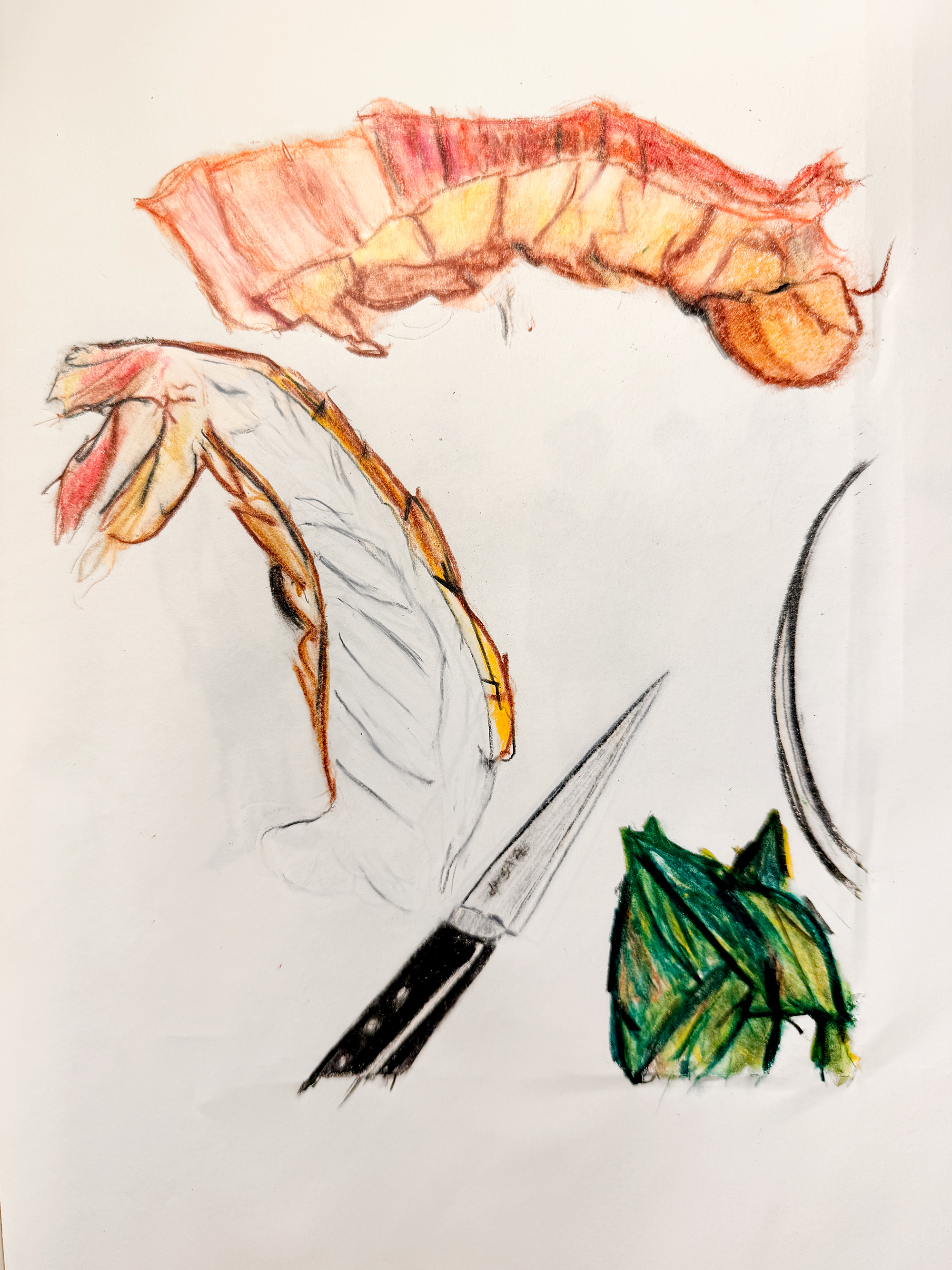
Interview with Chef Nicolas Darnauguilhem
Nicolas Darnauguilhem’s cooking is immediately recognizable: few ingredients, raw products, a clear sense of season, and an extreme attentiveness to place, land, and natural rhythm. Precise and grounded, restrained yet profound, it avoids effect in favor of depth. For years, he has worked in the mountains, far from urban agitation, where the cook becomes gardener, observer, interpreter of the living world. The temporary closure of his restaurant, La Pinte des Mossettes, created a rare pause. A clear realization emerged: “It is urgent that the world reconnect.” Absolute localism can become a form of withdrawal, “asphyxiating,” he says. From May 2026, at the Berghotel Zur Sau in Abländschen, he begins a discreet but essential shift: opening his cooking to the world, not through exoticism, but through fraternity, revealing Swiss terroir through dialogue, contrast, and exchange. He did not answer with a discourse, but as he cooks: by stripping back, by concentrating his words.
Our 9 questions: 1. When a new dish emerges, what does it usually begin with? 2. Your cooking relies on a deliberately limited number of ingredients. What does this reduction make possible, and what can never be removed? 3.Your work seems to seek accuracy rather than effect. How do you know when a dish is balanced? 4.When you taste a dish—your own or someone else’s—what do you listen for first? What sensations matter most to you? 5. If you stopped cooking tomorrow, what would you miss most? 6. You have cooked in very different environments, from cities to rural and mountain settings. What do certain places allow that others do not? 7. Has working close to the land changed your relationship to the craft? 8. Has working so closely with the land—cultivating, following the seasons—changed your relationship with your craft? Has it made you more patient, more humble, more demanding… or in some other way? 9. Are there products, gestures, or choices that you have deliberately set aside over time, not out of necessity, but out of consistency?
///
As with every cook, a dish begins with a memory.
Always.
An old taste. A smell. A light, perhaps. A landscape.
Something that returns without warning.
Then a desire is born from that memory.
An impulse.
The wish to give it form.
And very quickly, reality reasserts itself.
The season.
The garden.
What is available in the pantry.
Technical constraints.
The heat of the fire.
The material as it is.
Imagination leads the way.
But it is the world around that decides.
My cooking tends toward simplicity.
But it is a masked complexity.
Reducing does not mean removing.
Reducing means concentrating.
Allowing each thing to exist fully.
To move toward depth on its own.
Toward the natural complexity of aromas.
Without overload.
It is a quest.
Almost that of an alchemist.
Extracting the essence of simple things.
Showing that they already contain wonder.
Catching the eye.
Holding attention.
Making one feel an emotion that might
otherwise have gone unnoticed.
But something always resists removal.
Generosity.
The desire to add more.
Always.
I seek a cooking without stylistic effects.
A cooking that speaks to taste.
That marks the memory more than the eye.
The balance of a dish remains a mystery.
You think you feel it.
You imagine it.
You remove.
You strip it down.
You take away what is not essential.
Then, at some point, you stop.
But the real answer may come from elsewhere.
From silence.
The silence of the one who eats.
When I taste a dish, mine or someone else’s,
I do not look for a specific emotion.
Otherwise, I prevent the encounter.
I look for clear aromas.
Legibility.
A sense of verticality.
I like this idea of a very deep, very long bass line…
I like dishes that make you salivate.
That hold.
I ask nothing.
But I pay attention to what emerges.
And sometimes, a dish carries you away.
You close your eyes.
And you are elsewhere.
A forest.
The smell of roasted chestnuts.
Of smoke.
Of mist.
When cooking recreates landscapes through
memory… something truly happens
What I would miss, if I stopped cooking, would
be the morning.
The moment the stove is lit.
The calm still present.
The smells slowly rising.
Vegetables. Meat. Spices.
The kitchen coming up to temperature.
This liturgy of the craft.
The repeated gestures.
The gentle tension of preparation.
And then the moment of service.
When the dish leaves the kitchen.
To reach the table.
That passage.
For me, cooking is not limited to the gesture alone.
It also depends on the place in which that gesture
is anchored.
The city no longer attracts me for cooking.
For museums, concerts, yes.
But not for creating.
In the city, I feel people are scattered.
Solicited.
Not very available.
In the mountains, there is a long sense of time.
A refuge from constant agitation.
I went there for myself.
To clarify things.
But also for those who come to eat.
Up there, they are more available.
More receptive.
More attentive.
Working close to the land did not change my
relationship to the craft.
It allowed me to live it as I had always dreamed.
I discovered cooking at my grandparents’ home,
in the Landes.
The garden.
The chicken coop.
The earth entering the house.
Then that earth transforms.
Becomes magnified.
In shared plates.
When you are close to fragile products,
you become more demanding.
Almost without realizing it.
Perhaps more humble.
But above all, freer.
And reassured: what you are doing makes sense.
Over time, everything has tightened.
More precision.
More concentration.
A gradual stripping away of what is unnecessary.
No single decisive moment.
Rather cycles.
Every five years or so.
One more turn in the spiral.
What does not change is the genesis.
Love of the terroir.
Of plants.
Of the surrounding nature.
For a long time, I pushed locavorism very far.
Wanting to understand everything.
Produce everything.
Transform everything here.
Today, in a world that is closing in on itself,
I feel the desire for the opposite movement.
Cooking has always been exchange.
Travel.
Circulation.
My cooking will remain anchored here.
In the mountains that surround us.
But I want to let the world enter it.
A soy sauce from Japan.
An olive oil from Greece.
A pepper from Cambodia.
Not to be exotic.
To create connection.
Cooking is made of memories.
But above all, it is love.
Sharing.
And it knows no borders.
Original text:
Comme chaque cuisinier, un plat commence
par un souvenir.
Toujours.
Un goût ancien. Une odeur. Une lumière peut-être.
Un paysage. Quelque chose qui revient sans prévenir.
Puis une envie naît de ce souvenir.
Une impulsion.
Le désir de lui donner une forme.
Et très vite, le réel reprend ses droits.
La saison.
Le jardin.
Ce qu’il y a à l’économat.
Les contraintes techniques.
La chaleur du feu.
La matière telle qu’elle est.
L’imaginaire ouvre la marche.
Mais c’est le monde autour qui décide.
Ma cuisine tend vers une simplicité.
Mais c’est une complexité masquée.
Réduire ne veut pas dire enlever.
Réduire, c’est concentrer.
Permettre à chaque chose d’exister pleinement.
D’aller vers la profondeur par elle-même.
Vers la complexité naturelle des arômes.
Sans surcharge.
C’est une quête.
Presque celle d’un alchimiste.
Extraire l’essence des choses simples.
Montrer qu’elles contiennent déjà le merveilleux.
Attirer le regard.
Maintenir l’attention.
Faire ressentir une émotion qui aurait pu passer
inaperçue.
Mais quelque chose résiste toujours à la suppression.
La générosité.
L’envie d’en mettre plus.
Toujours.
Je cherche une cuisine sans effets de style.
Une cuisine qui parle au goût.
Qui marque la mémoire plus que le regard.
L’équilibre d’un plat reste un mystère.
On croit le sentir.
On l’imagine.
On retire.
On décharne.
On enlève ce qui n’est pas essentiel.
Puis, à un moment, on s’arrête.
Mais la vraie réponse vient peut-être d’ailleurs.
Du silence.
Le silence de celui qui mange.
Quand je goûte un plat — le mien ou celui d’un autre je ne cherche pas une émotion précise.
Sinon, j’empêche la rencontre.
Je cherche des arômes nets.
De la lisibilité.
Une verticalité.
J’aime cette idée d’une ligne de basse très profonde, très longue… comme un tanin qui soutient un vin.
J’aime les plats qui font saliver.
Qui tiennent.
Je ne demande rien.
Mais je suis attentif à ce qui surgit.
Et parfois, un plat transporte.
On ferme les yeux.
Et on est ailleurs.
Une forêt.
Une odeur de châtaignes grillées.
De fumée.
De brume.
Quand la cuisine recrée des paysages par la mémoire…
quelque chose se passe vraiment.
Ce qui me manquerait, si j’arrêtais de cuisiner,
ce serait le matin.
Le moment où l’on allume le fourneau.
Le calme encore présent.
Les odeurs qui montent peu à peu.
Les légumes. La viande. Les épices.
La cuisine qui prend température.
Cette liturgie du métier.
Les gestes répétés.
La tension douce de la préparation.
Et puis le moment du service.
Quand le plat quitte la cuisine.
Pour rejoindre la table.
Ce passage.
Cuisiner, pour moi, ne se résume pas au geste.
Cela dépend aussi du lieu où ce geste s’inscrit.
La ville ne m’attire plus pour cuisiner.
Pour les musées, les concerts, oui.
Mais pas pour créer.
En ville, je sens les gens dispersés.
Sollicités.
Peu disponibles.
En montagne, il y a un temps long.
Un refuge face à l’agitation permanente.
J’y suis allé pour moi.
Pour poser les choses plus clairement.
Mais aussi pour ceux qui viennent manger.
Là-haut, ils sont plus disponibles.
Plus réceptifs.
Plus à l’écoute.
Travailler près de la terre n’a pas changé mon rapport au métier.
Cela m’a permis de le vivre comme je l’avais toujours rêvé.
J’ai découvert la cuisine chez mes grands-parents, dans les Landes.
Le jardin.
Le poulailler.
La terre qui entre dans la maison.
Puis cette terre qui se transforme.
Qui se magnifie.
Dans des assiettes partagées.
Quand on est proche de produits fragiles,
on devient plus exigeant.
Presque sans s’en rendre compte.
Peut-être plus humble.
Mais surtout plus libre.
Et rassuré: ce que l’on fait a du sens.
Avec le temps, tout s’est resserré.
Plus de précision.
Plus de concentration.
Un dépouillement progressif de l’inutile.
Pas de moment unique.
Plutôt des cycles.
Tous les cinq ans environ.
Un tour de plus dans la spirale.
Ce qui ne change pas,
c’est la genèse.
L’amour du terroir.
Des plantes.
De la nature autour.
Longtemps, j’ai poussé très loin le locavorisme.
Tout comprendre.
Tout produire.
Tout transformer ici.
Aujourd’hui, dans un monde qui se replie,
j’ai envie du mouvement inverse.
La cuisine a toujours été échange.
Voyage.
Circulation.
Ma cuisine restera ancrée ici.
Dans les montagnes qui nous entourent.
Mais j’ai envie d’y faire entrer le monde.
Une sauce soja du Japon.
Une huile d’olive de Grèce.
Un poivre du Cambodge.
Pas pour faire exotique.
Pour créer du lien.
La cuisine, ce sont des souvenirs.
Mais c’est surtout de l’amour.
Du partage.
Et cela ne connaît pas de frontières.
///
Photo cover: drawing by Nicolas Darnauguilhem