Trust
1. THE DEATH OF TRUST
Business, politics and art have much in common. They live on trust and can’t do without it.
In business, trading parties must trust each other to hold up their end of the deal for the deal to go through. In politics, people must trust their surrounding society enough to keep faith in the advantage of negotiation and compromise over the use of brute force. In art, audiences must trust artworks to be more than mute artifacts — to be things that speak to the soul. If we didn’t trust works of art to talk to us, why look at, love, or collect them?
In writing, dear reader, I entrust you with my intuitions. Please trust me too. In return, I promise to try my best not to waste your time by sharing my thoughts.
I want to talk to you about trust because wherever I look I see it in short supply. Trust is running dry. If it fully goes extinct, business, politics and art will die with it.
For who would bother to earn a client’s respect and broker fair deals if rules of respect count for nothing, and guarantees can be voided when one party thinks they have the power to do so on a whim? Who would have patience with lengthy political negotiations if there were no such thing as society — no common interest in which, or common ground on which, to negotiate — and it were smarter to just push for your goals with no holds barred? And who would care for art if it were just more dead stuff on display, so you might as well nail money to the wall or clad your office in gold?
Now, I don’t want to bore you by pointing out how digital culture is to blame for the destruction of trust on a big scale. I could rant about how AI junk flooding social media, screen addiction and email miscommunication dissociate brains from life to a dangerous degree. The fundamental trust we seem to be losing is trust in our basic social capacity to still forge a shared reality together — a reality one could trust to be shared rather than fear to be a bubble.
Social reality is dying as the vital resource it’s built on — trust — is exhausted to the max. If each and every one of us doesn’t do something to restore trust fast, society — we, everyone — is going to be f_cked, and monumentally so. But everybody knows that. So you don’t need an art critic like me to make that point.
Art won’t be able to fix the problem when society loses trust in itself. On the contrary, throughout modern times it has been a popular sport to target art and artists for disappointing trust in traded values of truth and beauty. Still today, to many people “modern art” means “stuff of dubious merit, made by untrustworthy lunatics, charlatans and jokers.” Reportedly, people loved to visit the Paris Salon just to laugh at the latest Manet misfit painting. Today they marvel at it.
What hasn’t changed is the ingrained belief that art is prone to betray the values people trust, and hence must be met with suspicion.
Why else would the funding cuts that currently hit the arts hard across Europe deserve no public debate? Because it’s understood that the arts can’t be trusted to make valuable contributions to society, and hence don’t qualify as “system relevant” (as Germans say)? Money goes to the military now, I know. But what is saved through cuts to the arts is peanuts compared to what is spent on arms. How many art institutions do you have to bankrupt to pay for a single missile? How many more for a tank?
So, if cuts to arts funding are largely symbolic, what are they symbolic of? If not the cultural bankruptcy of trust in civic society, as symbolized by the arts?
2. THE BIRTH OF TRUST
Symbols speak of trust.
This is the original meaning and use of symbola in Greek antiquity. A symbolon is a token of trust — a tally guaranteeing that a bond forged today will still be respected in the future.
If friends promised to be there for each other at all times, they would honor their promise by breaking a piece of bone in two, leaving each friend with one half. Since no two bones break the same way, only the matching halves restore the original bone. Symballein literally means “to throw together, tally, compare, conclude.”
Anthropologist David Graeber writes that if a friend came to you with their half of the tally in the hour of need, you had to make good on the pledge “to always come to one another’s aid” and do all you could to help.
As a bond for future use, a symbolon could be passed down through generations. Graeber explains that a stranger fleeing political upheaval might arrive at your house with one half of such a pledge your father or grandfather had made to his. If the pieces fit together, you were not in a position to refuse.
The priceless value of a symbolon lies in its power to recall a past mutual investment in a shared future.
Here we return to the symbolic power of art. Poet Anne Carson argues that ancient Greeks considered the “grace” which poetry can bestow upon memory as future symbolic capital well worth investing in. If, for your grave, you purchased an epitaph from a poet, you had to trust their poetry to let your honor live on in people’s hearts for all time to come.
Carson writes: “A poet is someone who traffics in survival, reinflecting the fact of death into immortal publicity.”
A poem is a bond with the future — a symbolon entrusted with ensuring that posterity will look kindly upon you, celebrate your life, and mourn your death.
It makes you wonder whether societies that cease to fund the arts no longer care how they will be remembered. Or whether they have lost trust in the very possibility that there is anything honorable about them to be recalled — if they even believe they have a future.
Grim as it may sound, the exhaustion of trust seems to coincide with a loss of the ability to face the future and forge symbolic bonds with posterity by investing in art.
3. STOCKS AND STONES WILL BREAK MY BONES
Tallies are powerful tokens of trust because they marry symbolic value to material properties.
In medieval Europe, squared hazel wood sticks replaced bones as the preferred tally material, because hazel wood is durable and less likely to splinter when split.
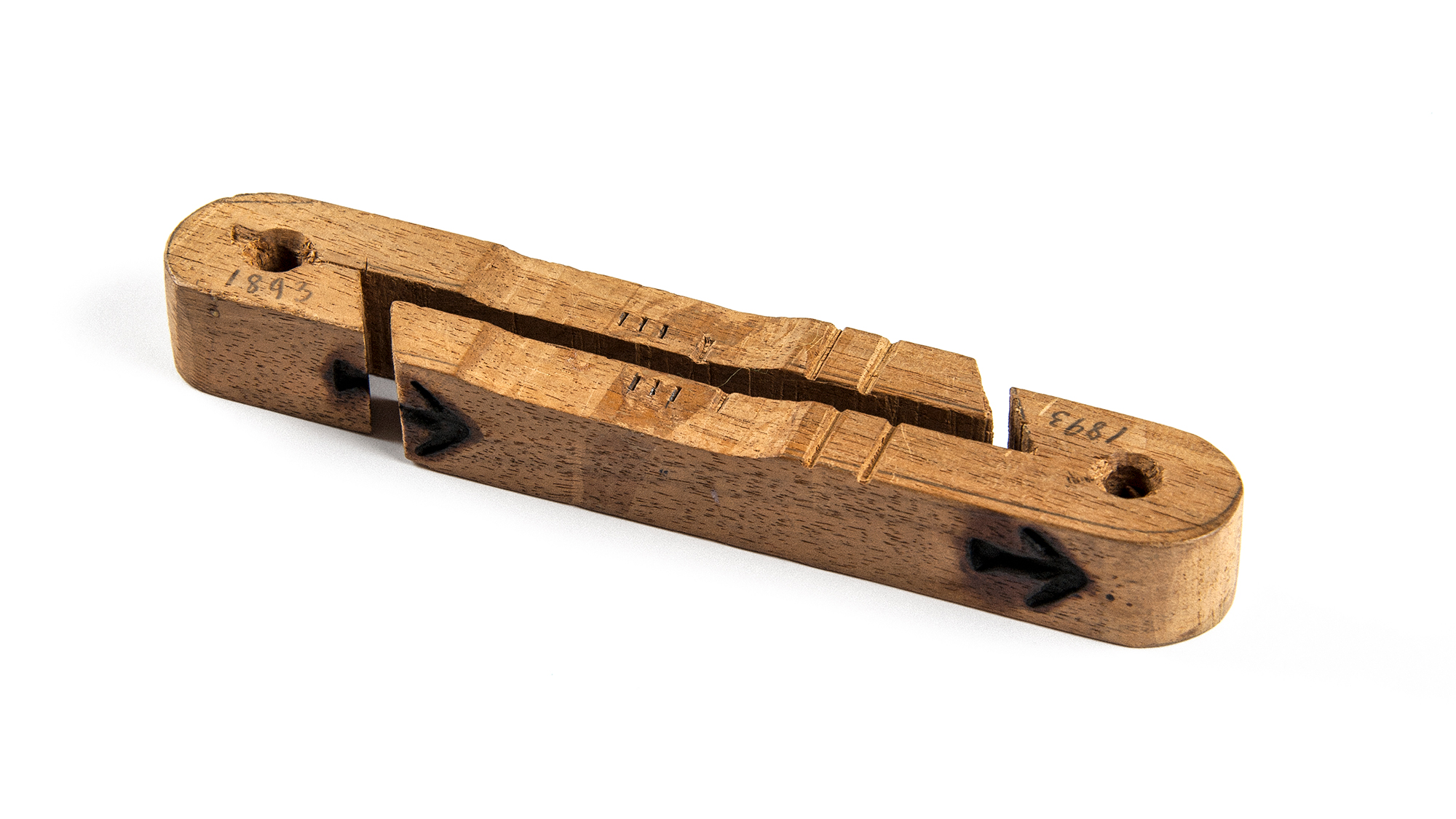
Entire economies relied on wooden tallies, Graeber recounts, not least because it was too costly to mint enough coins. People would cut horizontal marks in the wood to record the sum owed, split it vertically so the marks ran across both halves, and give creditor and debtor a unique record of their transaction. No two sticks split the same way.
Proof of a valid deal was established through an irreproducible symbol of mutual trust.
Creditors could trade tallies. But once the debt was paid — for example in natural goods after harvest — the halves were symbolically reunited and burned together.
Ever wondered where “stock” and “stockholder” come from? From these sticks. The creditor kept the larger piece — the “stock.” The debtor retained the smaller one — the “stub.”
In an age where cash flows are largely virtual, it may be tempting to fall in love with the material beauty of tally sticks. From an artistic point of view, why not? Each pair of split sticks is a unique carrier of value, memory and meaning. Like a work of art.
Certain tallies even have sculptural qualities. The Alpine Museum in Bern holds 18th-century tally sticks called Alprechtshölzer, part of a collection known as “Schaftesseln.” These are intricate little wooden carvings of sheep, each bearing a mark on its ear corresponding to the mark on a real sheep. If peasants let their flocks graze together, the carved effigy provided proof of ownership.
A system of trust guaranteed by pocket sculptures.
Let your livestock roam. Don’t worry. You will bring it home. The sculpture backs you up.
What if sculpture — ancient or modern — were heir to the tally? An effigy inspiring trust in the possibility of reunion with what you value but temporarily let go of.
Define sculpture, then, as a material presence that vouches for the return of someone or something you cherish — even when absent.
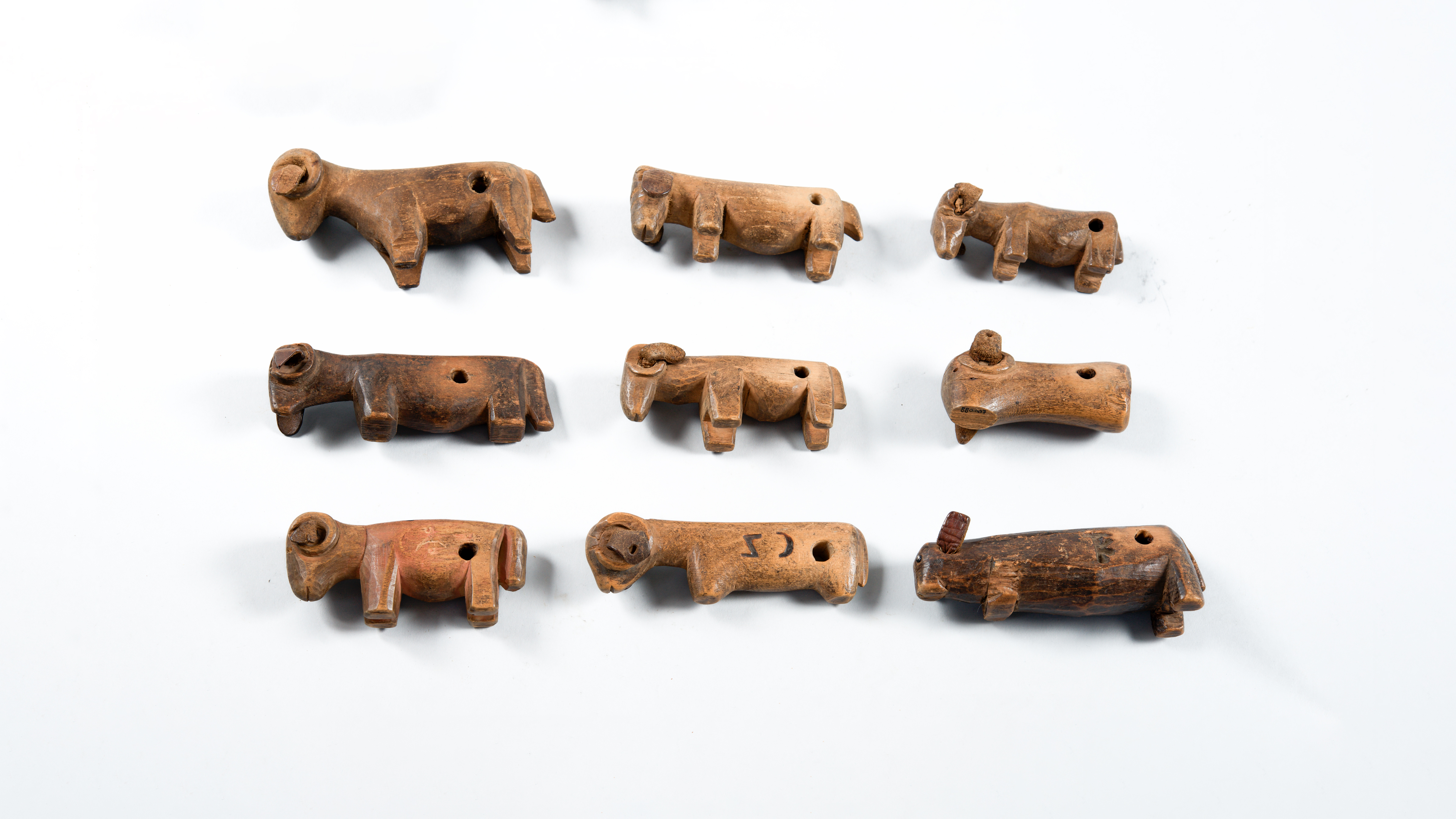
Photo: ALPS Swiss Alpine Museum
4. I GUESS THAT’S HOW THE FUTURE’S DONE
In Mushaboom (2003), singer Feist sings:
“We’ll collect the moments one by one.
I guess that’s how the future’s do_o_o o_o o_o o_one.”
The song, from her album Let It Die (2004), speaks about letting go of painful past relationships while rebuilding trust in an intimately shared future. It is dark and cheerful in equal measure.
It flips the tally, pairing pessimism with optimism.
Out pops the pragmatic mantra:
We’ll collect the moments one by one.
I guess that’s how the future’s done.
Feist sums up what tallies teach: relations with the future are built in small steps. Moments may split into good and bad. We go to pieces and pick them up together. We re-collect — re-symbolize — experience.
That is how the future is done.
Reality now unravels at frightening speed. Small tokens of trust hardly seem powerful enough to stop the social fabric from coming undone. Or are they?
To bear the slow pace at which human relations are woven — in politics, business and art — requires patience. Much of the weaving is invisible. Negotiators negotiate, traders trade and composers compose long before tangible results emerge.
Meanwhile, you must wait. And trust the process.
Political theorist Carl Schmitt argued in the 1920s that people lose faith in parliamentary government because they grow impatient with endless negotiation. They prefer decision-making power tangibly enacted by a sovereign leader.
The essential sovereign act, Schmitt wrote, is to cut the Gordian knots of mutual agreements, burn all tallies, and declare a “state of exception,” in which all bets are off and life takes place in the brute present tense dictated by whatever the sovereign decides.
Yet there is a brutal irony. The fantasy that one sovereign man can achieve alone what many minds cannot achieve together is just that — a fantasy. A fantasy powerful enough to destroy realities patiently crafted over generations through bonds and pledges.
Any small tally, carefully made, holds more durable reality in the long run.
What is real? How much of our carefully forged long-term bonds has been disrupted by the fantasy of sovereignty flickering across our screens? What tallies remain valid? How many moments must be recollected for societies to revive their power to “do” a future for everyone?
Our nervous systems are tethered to screens feeding nonstop anxiety. Can we still handle the patience required to recollect trust?
I have no cure.
But when I try to calm my mind enough to focus on building social realities, meditating on wooden tallies gives me a sense of sanity. So does humming Mushaboom.
For now, I’ll stick with that.
Because, trust me, perhaps that’s how the future’s do_o_o o_o o_o o_one.
///
Notes
1. David Graeber, “Tallies” (2018), The Anarchist Library, https://theanarchistlibrary.org/library/david-graeber-tallies.html (accessed 7 January 2026), p. 1.
2. I thank Dina Vainchtain for directing the conversation toward the link between trust and futurity.
3. Anne Carson, Economy of the Unlost (Princeton & Oxford: Princeton University Press, 1999), p. 27.
4.David Graeber, “Tallies,” p. 3.
5. See Carl Schmitt, Die geistesgeschichtliche Lage des heutigen Parlamentarismus (Berlin: Duncker & Humblot, 2017 [1923]); and Politische Theologie. Vier Kapitel zur Lehre von der Souveränität (Berlin: Duncker & Humblot, 2021 [1922]).
Photo cover: Doppeltessel from Alp Blümatt, Turtmann VS, 1893, ALPS Swiss Alpine Museum