
Conceived as a context-driven and itinerant prize, the award moves across fairs and cities, adapting each time to a new terrain. Rather than a fixed institution, it operates as a constellation, responding to the specificity of each event and its focus.
The award is presented across a selection of art fairs, whether organized by MAZE or in collaboration with third-party fairs. The number and selection of these collaborations evolve over time, following the shifting geography of artistic production.
Each edition is defined by its context. A work is selected within the fair, acquired, and donated to a public institution connected to the location or theme of the event. This structure establishes a direct relationship between gallery, artist, fair, and collection.
The award does not follow a fixed annual format, nor does it rely on a single jury or geography. Its criteria are redefined with each edition, depending on the field addressed, whether modern and contemporary art, ancient art, photography, or design. In this sense, it does not aim to produce a stable hierarchy, but to operate through situations.
The MAZE/Art Awards F.P.Journe place emphasis on circulation rather than competition. The selected work moves from a temporary presentation within a fair to a permanent institutional collection, extending its context and visibility beyond the event itself.
To date, three awards have been presented: the first at MIRA Art Fair, Paris (2025), followed by editions at MAZE Art Gstaad (February 2026) and TEFAF Maastricht (March 2026).
The next award, marking the fourth edition, will be presented during MAZE / Design Basel on June 14.
The inaugural MAZE/Art Awards F.P.Journe were presented on November 14, 2025, during MIRA Art Fair, Paris, dedicated to Latin American art.
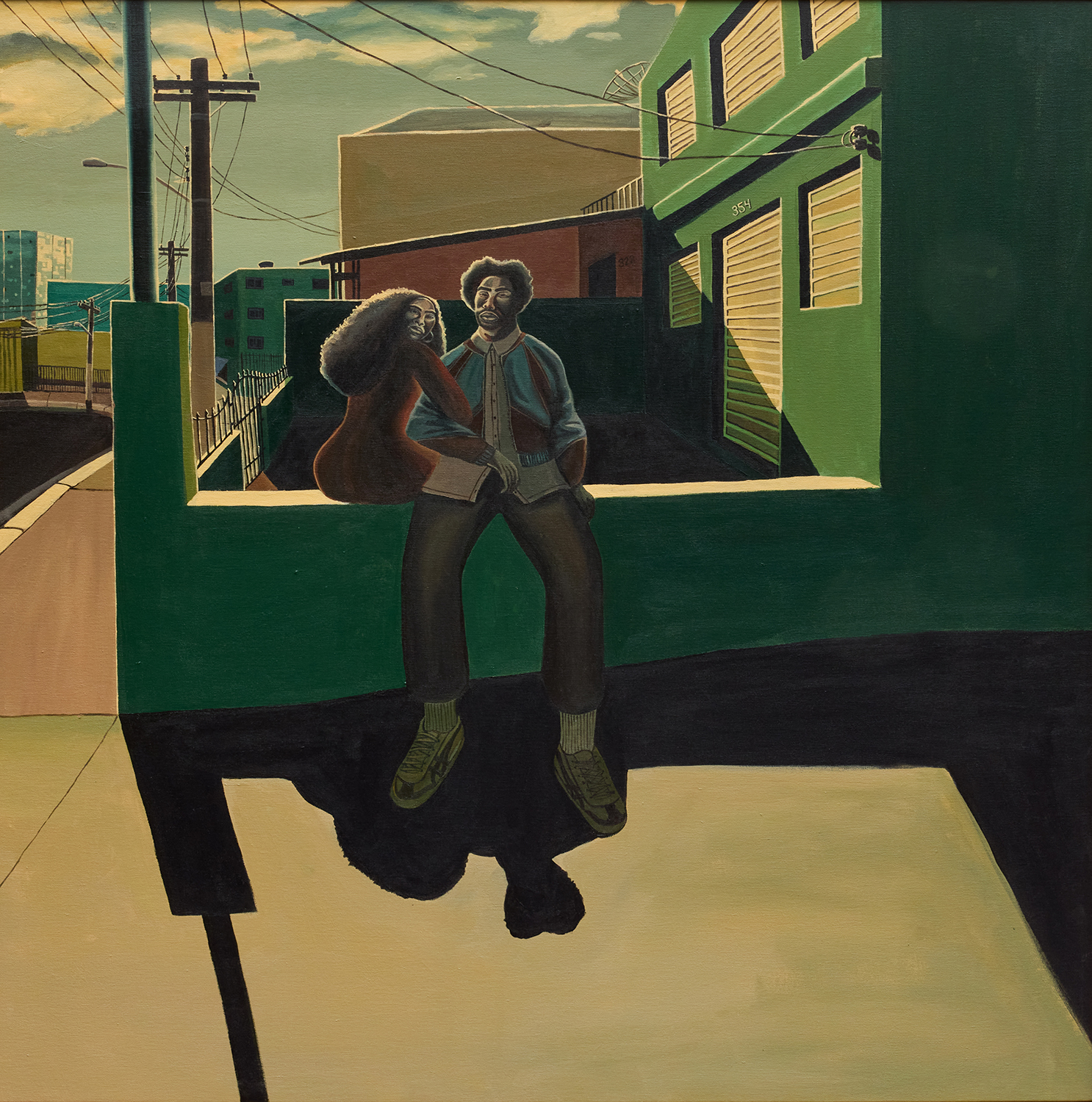
The jury, composed of Patricia Marshall (Fundación Jumex, Mexico) and Matthias Pfaller (Centre Pompidou, Paris), awarded the prize to Victor Fidelis, represented by Verve Gallery (São Paulo), for the work No limite do privado (2025).
.jpg)
Fidelis’s practice is shaped by his dual training as an artist and architect, resulting in a pictorial language where space, light, and structure carry both formal and psychological weight. Drawing from everyday life in São Paulo, his work engages with intimacy, memory, and Afro-Brazilian narratives, often approaching the domestic sphere as a site where personal and collective identities are negotiated. His compositions frequently balance figuration and construction, using architectural frameworks not only as settings but as active elements within the narrative.
The awarded painting, No limite do privado (2025), develops this approach through a scene structured around a moment of pause. Two figures share a quiet presence within a dense urban environment, where façades, walls, wires, and reflections define the space. Light plays a central role, marking transitions between interior and exterior, exposure and withdrawal. The work reflects the conditions of a specific São Paulo neighborhood, while addressing broader questions related to belonging, proximity, and the limits between private and public space.
The awarded work was acquired and proposed as a donation to the Centre Pompidou, Paris.
SECOND PRIZE / SONIA GOMES, UNTITLED (2024) / MAZE ART GSTAAD
The second edition of the MAZE/Art Awards F.P.Journe was presented on February 19, 2026, during MAZE Art Gstaad.
The jury included Maja Hoffmann (LUMA Foundation), Stephanie Seidel (Kunstmuseum Basel), and Tatyana Franck (L’Alliance New York). The award was granted to Sonia Gomes, represented by Mendes Wood DM (São Paulo, Brussels, Paris, New York), for the work Untitled (2024).
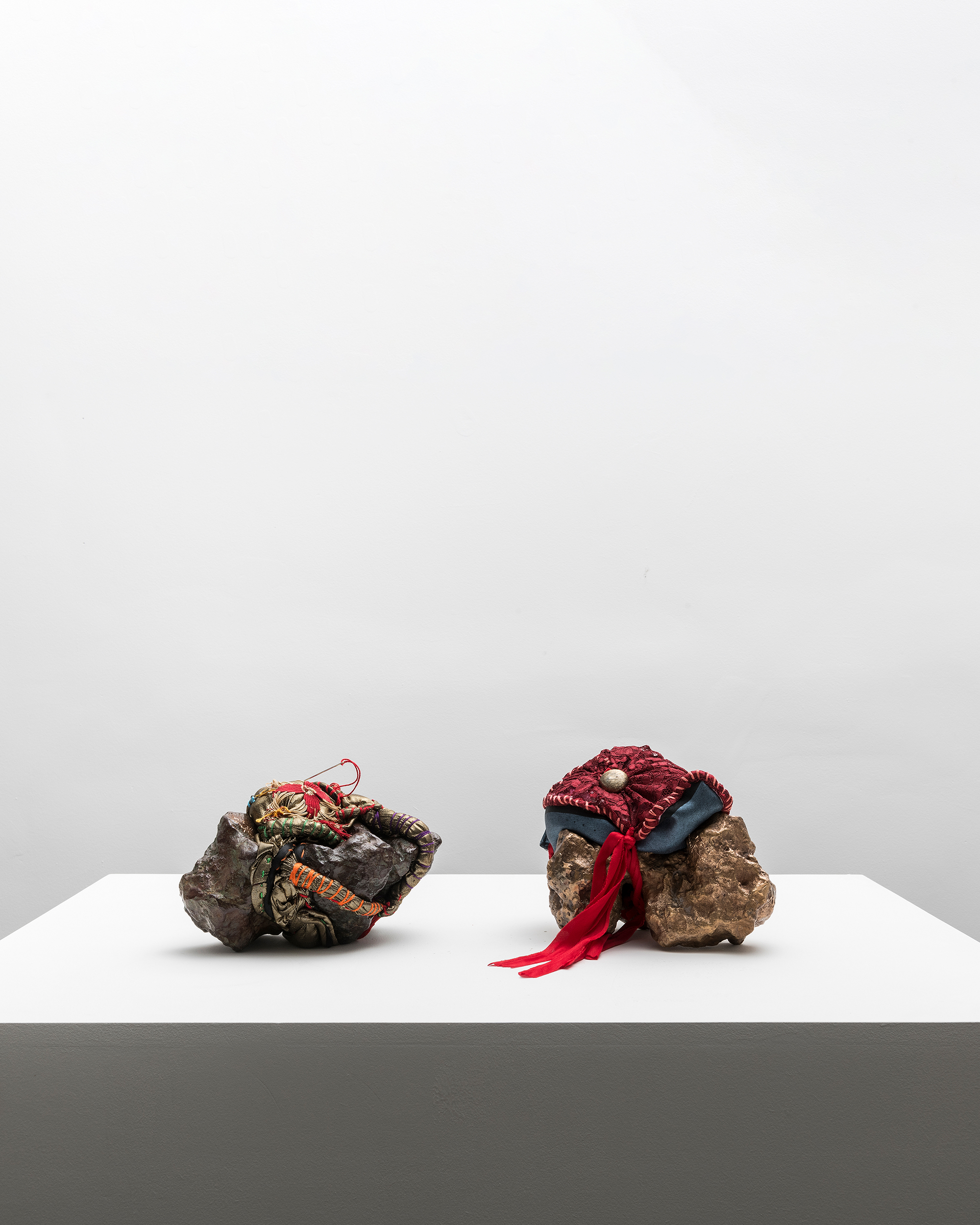
Born in 1948 in Caetanópolis, Minas Gerais, Brazil, Sonia Gomes lives and works in São Paulo. Her practice develops from the transformation of everyday materials, in particular textiles, which she sources, reuses, and reconfigures through manual processes. Working with fabrics that often carry traces of use, she engages with notions of memory, care, and transmission. Her approach is rooted in gesture, where the act of tying, stitching, and assembling becomes central to the construction of the work.
Her practice also reflects a broader dialogue between material and meaning. The materials she uses are not neutral; they carry social, cultural, and often personal histories. By reworking them, Gomes produces forms that remain open and in flux, avoiding fixed narratives while suggesting multiple layers of interpretation. Her works can be understood as both sculptural and relational, where structure emerges through accumulation and tension rather than through predefined form.
The awarded work, Untitled (2024), reflects these principles. Composed of layered and bound fabrics, the piece develops through a series of gestures that organize and reorganize the material. Color, texture, and weight interact within a structure that appears both constructed and in the process of transformation. The work maintains a sense of balance while retaining traces of instability, echoing the dynamic nature of her broader practice.
The awarded work was acquired and proposed as a donation to the Kunstmuseum Basel.
THIRD PRIZE / JEANNE SELMERSHEIM-DESGRANGE, UNTITLEDt (FLEURS D’AUTOMNE) / TEFAF MAASTRICHT
The third edition of the MAZE/Art Awards F.P.Journe was presented on March 12, 2026, during TEFAF Maastricht.
The jury was composed of Gabriel Dette (Kunstmuseum Basel), Lydia Berkens (Conservation Institute Maastricht), and Annabelle Ténèze (Musée du Louvre-Lens). The award was granted to Jeanne Selmersheim-Desgrange (1877–1958), presented by Galerie Pavec, for the work Untitled (Fleurs d’automne; c. 1919.

Born in France in 1877, Jeanne Selmersheim-Desgrange was active within the context of the early 20th century French avant-garde. She is associated with Neo-Impressionism, a movement that developed from Pointillism and focused on the systematic application of color and light through structured brushwork. Her work remained relatively less visible compared to some of her contemporaries, and has more recently been the subject of renewed attention through exhibitions and gallery presentations.
Selmersheim-Desgrange’s practice reflects the pictorial concerns of her time, while also demonstrating a distinct sensitivity in her handling of color and composition. Working within the Neo-Impressionist framework, she explored landscape and still life through a methodical yet expressive use of chromatic relationships, often emphasizing atmosphere and tonal variation.
Fleurs d’automne (Flowers of Autumn) is representative of this approach. The composition is structured through the careful placement of color, where small, distinct touches of paint build the image and define its surface. The work reflects both the formal discipline associated with Neo-Impressionism and the artist’s individual interpretation of light and seasonal motifs.
This edition of the award aligns with the specific context of TEFAF Maastricht, a fair known for bringing together works from antiquity to contemporary art. In this framework, the prize focused on the rediscovery of a historical artist presented by a modern or contemporary gallery, highlighting the role of galleries in reintroducing such practices into current artistic discourse.
The awarded work was acquired and proposed as a donation to the Kunstmuseum Basel.